


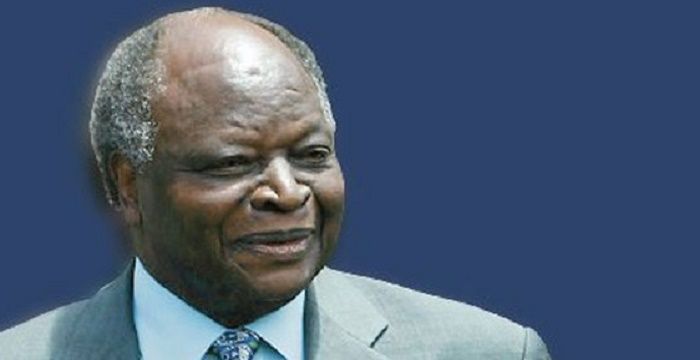
Mwai Kibaki was a Kenyan economist, politician, and statesman who served as the third President of Kenya from 2002 to 2013. Before becoming president, he held several senior government positions, including Minister for Finance, Minister for Health and Vice President. His long political career also included several decades as a Member of Parliament.
Kibaki was widely associated with economic management and public-sector reform. His presidency saw strong economic growth, major infrastructure development, the introduction of free primary education, and the adoption of Kenya’s 2010 Constitution. He died in Nairobi on April 21, 2022, at the age of 90.
Quick Facts
| Detail | Information |
| Full Name | Mwai Kibaki |
| Date of Birth | November 15, 1931 |
| Birthplace | Gatuyaini village, Othaya, Nyeri |
| Date of Death | April 21, 2022 |
| Age at Death | 90 |
| Nationality | Kenyan |
| Education | Makerere University; London School of Economics |
| Profession | Economist, Politician and Statesman |
| Wife | Lucy Muthoni Kibaki |
| Children | Judy Wanjiku, Jimmy Kibaki, David Kagai and Tony Githinji |
| Vice President | 1978–1988 |
| President of Kenya | 2002–2013 |
Early Life and Family
Mwai Kibaki was born on November 15, 1931, in Gatuyaini village in Othaya, in present-day Nyeri County. He was the youngest child of Kibaki Githinji and Teresia Wanjiku and grew up in a large family with eight siblings. His early years were spent in rural Othaya, where he helped with family activities while attending school.
Kibaki’s family lived a relatively modest rural life, and his early education was influenced by Catholic missionaries who had established schools in the area. He began his schooling at Gatuyaini Village School before moving to Karima Mission School and later Mathari School, now known as Nyeri High School. He subsequently attended Mang’u High School, where he achieved excellent results in his Cambridge examinations.
Although he was baptized Emilio Stanley Kibaki by Italian missionaries, he was known publicly throughout his life as Mwai Kibaki. He remained a practicing Catholic and was also known for his long-standing interest in golf.
Education
Kibaki’s academic career was one of the strongest foundations of his later political life. In 1951, he joined Makerere University College in Uganda, where he studied Economics, History and Political Science. He graduated with a First-Class Honours degree in Economics.
After Makerere, Kibaki received a scholarship for further studies in Britain. He attended the London School of Economics, where he studied public finance and obtained a degree with distinction. His advanced training in economics and public finance later influenced his approach to government economic policy.
After completing his studies, Kibaki returned to East Africa and worked as an assistant lecturer in economics at Makerere University. His academic experience gave him a strong reputation as an economist before he entered Kenyan politics.
Mwai Kibaki’s Wife and Children
Mwai Kibaki married Lucy Muthoni in 1961. Lucy was a trained teacher from Mukurwe-ini in Nyeri County and had worked at institutions including Kamwenja Teachers College and Kambui College. In 1963, she left her teaching career to concentrate on family life and support Kibaki as his political career developed.
The couple had four children: Judy Wanjiku, Jimmy Kibaki, David Kagai and Tony Githinji. Kibaki generally kept his family life away from the intense public attention surrounding his political career. His son Jimmy later became involved in Kenyan politics and public affairs. Lucy Kibaki became Kenya’s First Lady when her husband became president in 2002. She remained in the position throughout his presidency and died in 2016.
Entry Into Politics
Kibaki entered politics during Kenya’s transition toward independence. In the early 1960s, he became involved with the Kenya African National Union (KANU) and participated in the political and constitutional discussions that preceded independence.
In the 1963 elections, Kibaki successfully contested a parliamentary seat in Nairobi. He later moved his political base to Othaya, his home constituency, where he became a long-serving Member of Parliament. His parliamentary career eventually became one of the longest in Kenya’s post-independence history.
His reputation as an economist helped him rise quickly within government. He held several ministerial positions, including Commerce and Industry, Finance and Economic Planning, Home Affairs, and Health.
Minister for Finance
Kibaki’s years as Minister for Finance and Economic Planning were among the most important stages of his early political career. He served in the finance portfolio for many years and became closely associated with economic planning and fiscal management.
His background in economics made him one of the country’s leading technocrats. He was often viewed as a politician who brought an economist’s approach to government policy, particularly in areas involving public finance, investment, and economic development.
Vice President of Kenya
Kibaki became vice president of Kenya in 1978 under President Daniel arap Moi. He remained vice president until 1988 while also holding other important government responsibilities. His relationship with the Moi administration eventually became strained. After leaving the vice presidency, Kibaki continued serving in senior government positions, including as Minister for Health, before eventually moving into opposition politics.
Opposition Politics and Presidential Campaigns
Kibaki became one of Kenya’s most prominent opposition politicians during the transition to multiparty politics. He founded the Democratic Party (DP) and challenged President Daniel arap Moi in the 1992 and 1997 presidential elections.
Although he lost both elections, Kibaki remained a major figure in Kenyan opposition politics. His reputation as an experienced economist and senior statesman helped him retain a strong national following. His opportunity finally came in 2002, when several opposition parties joined together under the National Rainbow Coalition (NARC).
Mwai Kibaki Presidency
Kibaki won the 2002 presidential election, defeating KANU candidate Uhuru Kenyatta. He was sworn in as Kenya’s third president on December 29, 2002. He served two terms, leaving office in April 2013.
His first term began with an emphasis on economic recovery, public services, and infrastructure. The government introduced several reforms designed to stimulate economic activity and expand access to basic services.
According to the Mwai Kibaki Presidential Library, Kenya’s economic growth increased from about 0.4 percent in 2002 to 7 percent by the end of 2007. His administration also pursued the Economic Recovery Strategy and later developed the Vision 2030 development blueprint.
Free Primary Education and Infrastructure
One of Kibaki’s most recognizable policies was the introduction of free primary education in 2003. The policy significantly increased access to primary schooling and became one of the defining social programs of his first term.
His administration also invested heavily in infrastructure. Major road projects and improvements in electricity access formed part of the government’s broader development agenda. The Thika Superhighway, which became one of Kenya’s most recognizable modern road projects, was developed during his presidency. The government also promoted rural development and improvements in public infrastructure as part of its economic recovery program.
2007 Election and Coalition Government
Kibaki sought a second presidential term in the 2007 general election. The election was highly contested, and the announcement of Kibaki as opposition leader Raila Odinga disputed the winner.
The political dispute was followed by widespread post-election violence. Hundreds of thousands of Kenyans were displaced, and the crisis became one of the most serious political challenges of Kibaki’s presidency.
A power-sharing agreement was eventually reached through mediation led by former United Nations Secretary-General Kofi Annan. Kibaki remained president while Raila Odinga became prime minister in the coalition government.
2010 Constitution and Second Term
Kibaki’s second term was also marked by major institutional change. His administration oversaw the constitutional reform process that resulted in the adoption of the 2010 Constitution of Kenya. The new Constitution introduced a system of devolution and substantially changed Kenya’s political and administrative structure.
Kibaki completed his second presidential term and handed power to Uhuru Kenyatta in April 2013. His departure brought an end to more than five decades of involvement in Kenyan public life.
Life After the Presidency
After leaving State House, Kibaki largely withdrew from active partisan politics. He continued to participate in development-related activities and remained an influential elder statesman. His post-presidential years were relatively private compared with his time in office. He continued to be associated with issues involving economic development, education and water resources.
Kibaki died in Nairobi on April 21, 2022, at the age of 90. Kenya accorded him a state funeral, and he was buried at his home in Othaya, Nyeri County.
Mwai Kibaki Net Worth
Mwai Kibaki’s exact net worth was never publicly verified. Various websites have published estimates in the tens of millions of dollars, but these figures are not supported by an official financial statement or an independently verified valuation.
Because Kibaki was a senior politician for decades and accumulated assets during his public and professional career, his estate was understood to be substantial. However, the precise value of his assets and investments has not been conclusively established in reliable public records. For this reason, it is more accurate to describe his net worth as undisclosed rather than present an online estimate as fact.
Legacy
Mwai Kibaki’s legacy is closely connected with economic recovery, infrastructure development, education, and constitutional reform. His government presided over significant economic growth during his first term, while major development projects transformed transportation and other infrastructure across the country.
The introduction of free primary education remains one of the policies most closely associated with his administration. His government also played an important role in the adoption and implementation of the 2010 Constitution. At the same time, his presidency remains closely associated with the political crisis following the 2007 election. The resulting violence and the subsequent coalition government became defining events in Kenya’s modern political history.
Despite the political controversies, Kibaki remains an important figure in Kenya’s post-independence history. His combination of economics, parliamentary experience and executive leadership made him one of the country’s most influential political figures.
Frequently Asked Questions About Mwai Kibaki
When was Mwai Kibaki born?
Mwai Kibaki was born on November 15, 1931, in Gatuyaini village in Othaya, Nyeri.
How old was Mwai Kibaki when he died?
He was 90 years old when he died on April 21, 2022.
Who was Mwai Kibaki’s wife?
His wife was Lucy Muthoni Kibaki, whom he married in 1961.
How many children did Mwai Kibaki have?
Mwai Kibaki and Lucy Kibaki had four children: Judy Wanjiku, Jimmy Kibaki, David Kagai and Tony Githinji.
Where did Mwai Kibaki study?
He studied at Makerere University, where he earned a First-Class Honours degree in Economics, and later attended the London School of Economics.
When was Mwai Kibaki president of Kenya?
Kibaki served as President of Kenya from 2002 to 2013.
How long was Mwai Kibaki vice president?
He served as Vice President from 1978 to 1988.
What was Mwai Kibaki’s profession?
Kibaki was an economist, academic, and politician. Before entering full-time politics, he taught economics at Makerere University.
What was Mwai Kibaki’s net worth?
His exact net worth remains undisclosed and unverified. Online estimates exist, but there is no reliable public valuation that establishes a definitive figure.